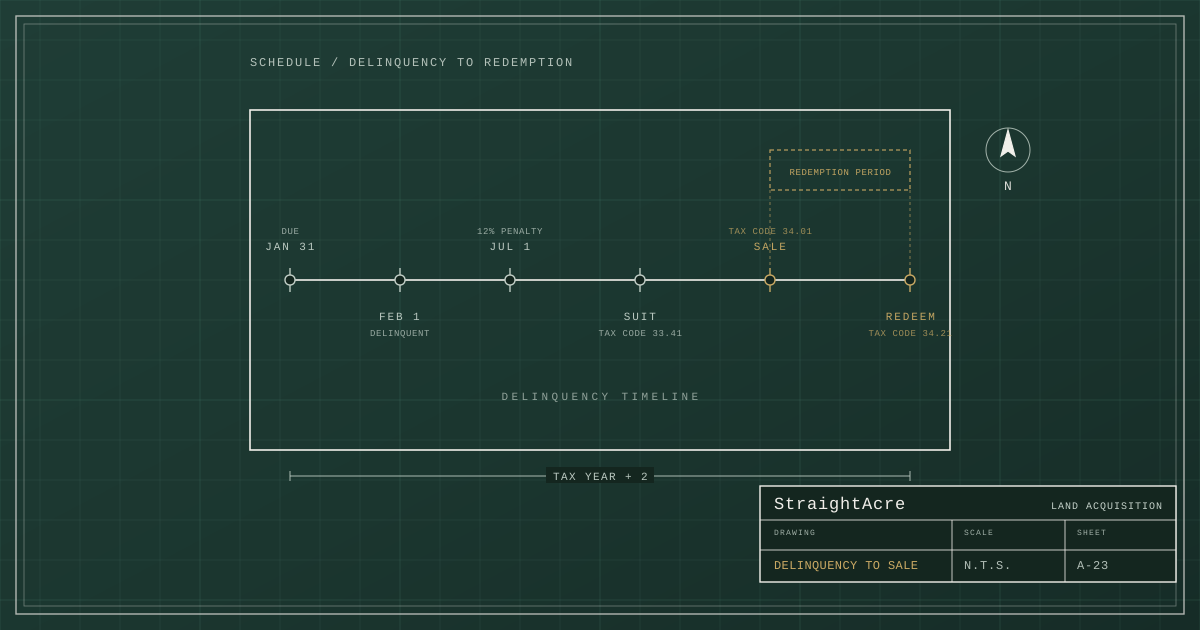
When do Texas property taxes become delinquent, and what gets added?
Taxes are generally delinquent if not paid before February 1 of the year after they were imposed. Tax Code section 31.02(a) says taxes are due on receipt of the bill and delinquent if not paid before February 1 of the following year. The Texas Comptroller adds that if a bill is mailed after January 10, the delinquency date moves to the first day of a month that gives at least 21 days to pay.
Once a tax is delinquent, section 33.01 adds a penalty and interest:
- Penalty. Six percent for the first calendar month, plus one percent for each additional month before July 1. A tax delinquent on July 1 carries a total penalty of twelve percent.
- Interest. One percent for each month or part of a month the tax stays unpaid.
- After judgment. Both continue to accrue after a judgment is entered.
The Comptroller also notes that private attorneys hired by taxing units to collect delinquent accounts can charge an additional penalty of up to 20 percent, and that a tax lien attaches to the property on January 1 each year. Under sections 33.07 and 33.08 a taxing unit must adopt that penalty, it cannot exceed the attorney’s contract compensation, and a unit that imposes it may not also recover attorney’s fees in the collection suit. Delinquency is not an auction date. It means a taxing unit may sue.
What is a Texas property tax lien, and who owes it?
A tax lien attaches to Texas land on January 1 of each year, before the bill exists. Tax Code section 32.01(a) says the lien secures all taxes, penalties and interest ultimately imposed for that year, whether or not the taxes are imposed in the year the lien attaches. It exists in favor of each taxing unit with power to tax the property.
This section is written for property owners. The search phrase “Texas property tax lien” is also used by investors who want to buy tax liens. We are not describing an investment, and we do not sell tax liens.
Does the lien come before a homestead interest or other liens?
Yes, with limits. Section 32.05(a) says a tax lien on real property takes priority over a homestead interest. Section 32.05(b) adds that it takes priority over the claims of other creditors of the owner, over the claims of other lien holders on the property (including liens held by property owners’ and condominium associations), and over remainders, reverters and other future interests. Under section 32.05(b-1) that priority applies even if the debt or lien existed before the tax lien attached.
Section 32.05(c) lists what ranks ahead of it: a decedent’s survivor’s allowance, funeral expenses and last-illness expenses claimed against the estate; a recorded restrictive covenant running with the land that was recorded before January 1 of the year the lien arose; and a valid easement of record recorded before that January 1.
Who is personally liable for the tax?
Section 32.07(a) makes property taxes the personal obligation of the person who owns or acquires the property on January 1 of the year the tax is imposed, and says a person is not relieved because he or she no longer owns the property. If you sell in June, the bill for that year can still be addressed to you as the January 1 owner; how the cost is split with the buyer is set by the contract and the title company’s settlement statement. For land sold on an installment contract, section 32.07(h) treats the seller, and a buyer who has the duty to pay taxes under the contract, as owners.
Because the lien sits ahead of most other claims and follows the land, a title company will normally require unpaid taxes to be paid or accounted for at closing. See selling land with back taxes. This is general information, not legal advice. Ask a Texas attorney about your own parcel.
How does a delinquent tax become a lawsuit and a sale?
A taxing unit may sue to foreclose its tax lien, and if it wins, the property can be ordered sold by an officer. The main steps and their statutes:
| Stage | What the statute provides | Tax Code |
|---|---|---|
| Delinquency | Unpaid before February 1 of the following year | 31.02 |
| Penalty and interest | Accrue while the tax is unpaid, including after judgment | 33.01 |
| Suit | A taxing unit may sue at any time after the tax is delinquent, in a court in the county where the tax was imposed | 33.41 |
| Other taxing units | A unit foreclosing a real property lien must join other units with delinquent-tax claims on the same property | 33.44 |
| Order of sale | Property ordered sold under foreclosure is sold by the officer charged with selling it | 34.01 |
| Redemption | Owner’s right to buy the property back after the sale | 34.21 |
Section 33.41(a) sets no waiting period between delinquency and suit. How soon a unit sues is a question for that unit and its attorney.
What the sale involves (section 34.01):
- The officer gives written notice of the sale to each defendant under Rule 21a. Failure to send or receive it is not, by itself, enough to invalidate the sale.
- Sales generally take place at the county courthouse between 10 a.m. and 4 p.m. on the first Tuesday of a month, unless a county has authorized online bidding.
- An owner may file a written request that the property be divided so that only as much as needed is sold. It must reach the officer not later than the seventh day before the sale.
- If no sufficient bid is received, the taxing unit that requested the order of sale may terminate the sale. If it does not, the officer bids the property off to the unit.
- A sale to a purchaser other than a taxing unit extinguishes the tax liens included in the judgment, but does not affect personal liability for amounts the sale does not satisfy.
How long do you have to redeem after a tax sale?
Section 34.21 gives two years for qualifying property and 180 days for everything else, counted from when the deed is filed for record. This matches the summary on our back taxes guide.
- Two years. This applies to property that was the owner’s residence homestead or land designated for agricultural use when the suit was filed, and to mineral interests. Under section 34.21(g), “land designated for agricultural use” means land whose agricultural appraisal application has been finally approved. The deadline is the second anniversary of the date the purchaser’s deed is filed for record.
- 180 days. For other real property, the right must be exercised not later than the 180th day after the deed is filed for record.
- Premium. When redeeming from a private purchaser, the owner pays the bid, the recording fee and the purchaser’s taxes, penalties, interest and costs, plus a premium. For the two-year category it is 25 percent in the first year and 50 percent in the second. For other property it cannot exceed 25 percent.
Redemption does not give you the right to use or possess the property or collect rents while it lasts (section 34.21(h)). It also cannot be transferred. Section 34.21(l) says any instrument purporting to transfer it is void. A buyer cannot simply purchase your right to redeem.
Can I sell my land before the tax sale?
Yes. An ordinary sale before the tax sale is separate from redemption. You sell to a buyer, and the delinquent taxes are paid from the proceeds at closing. After a tax sale, you are no longer selling. You are redeeming, under the rules above.
- Taxes must be cleared. The Comptroller states that a buyer cannot obtain clear title until all delinquent taxes on the property are paid.
- Get written payoffs. Ask every taxing unit and any collection attorney for a payoff good through the expected closing date. Penalty and interest keep accruing under section 33.01, so numbers change.
- Put the payoff in the contract. The contract should require the title company to pay the taxes from your proceeds.
- Watch the calendar. An offer or contract does not pause a suit or a sale date. The sale must close and the taxes be paid in time.
- Ask about payment plans. The Comptroller says installment plans of up to 36 months may be available, but are required only for residence homesteads.
See how long it takes to close on land. Nobody can promise a closing date.
If you already have a suit or sale date, call a Texas attorney now
Do not wait for an offer to solve it. Once a suit is filed or a sale is scheduled, deadlines are running.
- Read every court paper for response dates, and keep the citation, any judgment, any order of sale and any notice of sale.
- Whether the property counts as a residence homestead or agricultural land when the suit was filed affects the redemption period. An attorney can check your status.
- A request to divide the property before a sale must reach the officer by the seventh day before the sale.
Bring your deed, tax statements and every court paper.
How other states collect unpaid land taxes
Texas sells the land itself after a lawsuit. Other states differ, and the official text is the place to check. In Florida, the county sells a tax certificate on delinquent property, the owner can redeem at any time before a tax deed is issued (Fla. Stat. 197.472), and the certificate holder can apply for a deed two years after April 1 of the year the certificate was issued (197.502). In Illinois, delinquent taxes are sold at an annual tax sale and the buyer receives a tax certificate (35 ILCS 200/21-110 and 21-250); the redemption period runs from the sale date and depends on the type of property (21-350). In Alabama, each county’s tax collector decides whether the county sells a tax lien or sells the property (Ala. Code 40-10-180). In New York, the tax lien is foreclosed in rem, and the redemption period expires two years after the lien date unless local law says otherwise (RPTL 1110 and 1120). In California, tax-defaulted property can be sold by the tax collector five years after default, or three years for nonresidential commercial property (Cal. Rev. & Tax. Code 3691). In Washington, the county treasurer issues certificates of delinquency to the county three years after delinquency (RCW 84.64.050). In Rhode Island, the collector sells the land at public auction, and the buyer can petition to foreclose the right of redemption one year after the sale (R.I. Gen. Laws 44-9-8 and 44-9-25). Delinquency dates and local rules vary, so read your notice and ask the county treasurer or tax collector before relying on any summary.
Tax-sale questions for the title company or an attorney
- Which taxing units have delinquent claims on this property, and what is each payoff through the closing date?
- Has a suit been filed, or a judgment or order of sale entered?
- Is a sale date set, and can a closing happen before it?
- How was the property classified when the suit was filed, and what redemption period applies if a sale occurs?
- Will the title company pay the taxes from my proceeds and confirm it in writing?
- Are there other liens or co-owners who must sign?
A hypothetical Travis County tract from first notice to redemption
Hypothetical example. The owner, the parcel, and every dollar figure below are invented to show the arithmetic. The county procedures, fees, deadlines, and statutes are real and linked, as read on October 21, 2026. Your numbers will differ.
Say you own 15 acres of pasture near Coupland in Travis County with an agricultural appraisal, $1,600 a year in taxes, and you stopped paying after 2023. This is the calendar as the statutes and the Travis County offices run it.
February 1, 2024. The 2023 tax is delinquent (Tax Code §31.02). Penalty starts at 6 percent and climbs to 12 percent by July 1; interest runs 1 percent a month (§33.01). In a taxing unit that has adopted the collection-cost penalty, an additional penalty can attach on July 1 if the account is referred to the delinquent tax attorney. It cannot exceed the attorney’s contract compensation, and the Comptroller describes it as up to 20 percent (§33.07). The Travis County Tax Office would have offered a payment schedule of six monthly payments on a non-homestead parcel (delinquent taxes and payment plans); in this made-up case you did not take it.
2025. The 2024 tax goes delinquent the same way. The Travis County Attorney’s tax collections team, which collects delinquent property tax through suits in the state courts, files a suit to foreclose the tax lien; a taxing unit may sue any time after delinquency (Travis County Attorney, tax collections; Tax Code §33.41). The suit adds court costs and, unless the unit has imposed the §33.07 collection penalty (which bars recovering attorney’s fees in the suit), attorney’s fees of 15 percent of the taxes, penalties, and interest due (§33.48).
2026, the sale. After judgment, the constable sells the land at a public sale; Travis County conducts its tax sales online through RealAuction, does not sell tax liens, and issues a constable’s deed in the name the winning bidder registered (Travis County Tax Office, foreclosure sale FAQ; Tax Code §34.01). The minimum bid is the taxes, penalties, interest, attorney fees, and court costs for the years sued on. Assume the judgment is $6,900 and the land sells for $150,000. The surplus above the judgment is excess proceeds. A former owner who was a defendant in the judgment can petition the court that ordered the sale (the Travis County Tax Office points to the District Clerk) before the second anniversary of the sale, and the court orders payment by priority (§34.04).
Redemption. Because the land had an agricultural appraisal when the suit was filed, you may redeem within two years after the purchaser’s deed is recorded by paying the bid, the deed recording fee, the taxes and costs the purchaser has paid, plus a 25 percent premium in the first year or 50 percent in the second (Tax Code §34.21(a)). Without the agricultural appraisal it would have been 180 days (§34.21(e)). Redeeming in month six would cost at least $187,500 (the $150,000 bid plus the 25 percent premium), plus the recording fee and the purchaser’s taxes and costs, which also carry the premium. Selling the land yourself in 2025 for $150,000 and paying the taxes owed from proceeds at closing (assume $6,900 for simplicity) would have left about $143,100 before closing costs. That comparison is the whole point of the calendar.
What to bring once a tax suit or sale is on the calendar
At this stage the paper is the timeline. A buyer, an attorney, and the tax office all read it the same way.
- The tax certificate or a current statement from the collector for every year and every taxing unit.
- The petition and citation if a suit has been filed, with the cause number and court.
- The judgment and order of sale, if entered, with the sale date.
- Any installment agreement and its payment history.
- Proof of agricultural appraisal or homestead, which sets the redemption period at two years instead of 180 days.
- Your deed and every owner’s name, since each must be served.
- After a sale: the recorded constable’s deed and its recording date, which starts the redemption clock.
Sources and further reading
- Texas Tax Code chapter 31 (section 31.02, delinquency date)
- Texas Tax Code chapter 32 (sections 32.01, 32.05, 32.07: tax lien, priority, personal liability)
- Texas Tax Code chapter 33 (sections 33.01, 33.41, 33.44)
- Texas Tax Code section 34.01 (sale of property)
- Texas Tax Code section 34.21 (right of redemption), and section 34.04 (excess proceeds)
- Texas Comptroller: paying property taxes
- Texas Tax Code §33.07, additional penalty for collection costs, and §33.48, recovery of costs and attorney’s fees
- Travis County Tax Office: delinquent taxes and payment plans
- Travis County Attorney: tax collections
- Travis County Tax Office: tax foreclosure sale FAQ
Related guides
If the clock is already running, write to us today
If you have received a delinquency notice, a lawsuit, or a sale date on Texas land, send the county, parcel ID, the names on the deed, and the most recent letter from the tax office or its attorney. We review whether the property fits our current acquisition criteria and tell you in writing whether we would buy directly or assign the contract. An inquiry is not a binding offer or a promise to purchase.
Get my free parcel review